 I'm getting a bit behind on posting. I've still got some images from weeks ago that I want to post. Reviewing all the pictures and post processing can take a lot of time, so sometimes I put up the "easier", "quicker" image to get a post up leaving some of the tougher (sometimes better images) images behind.
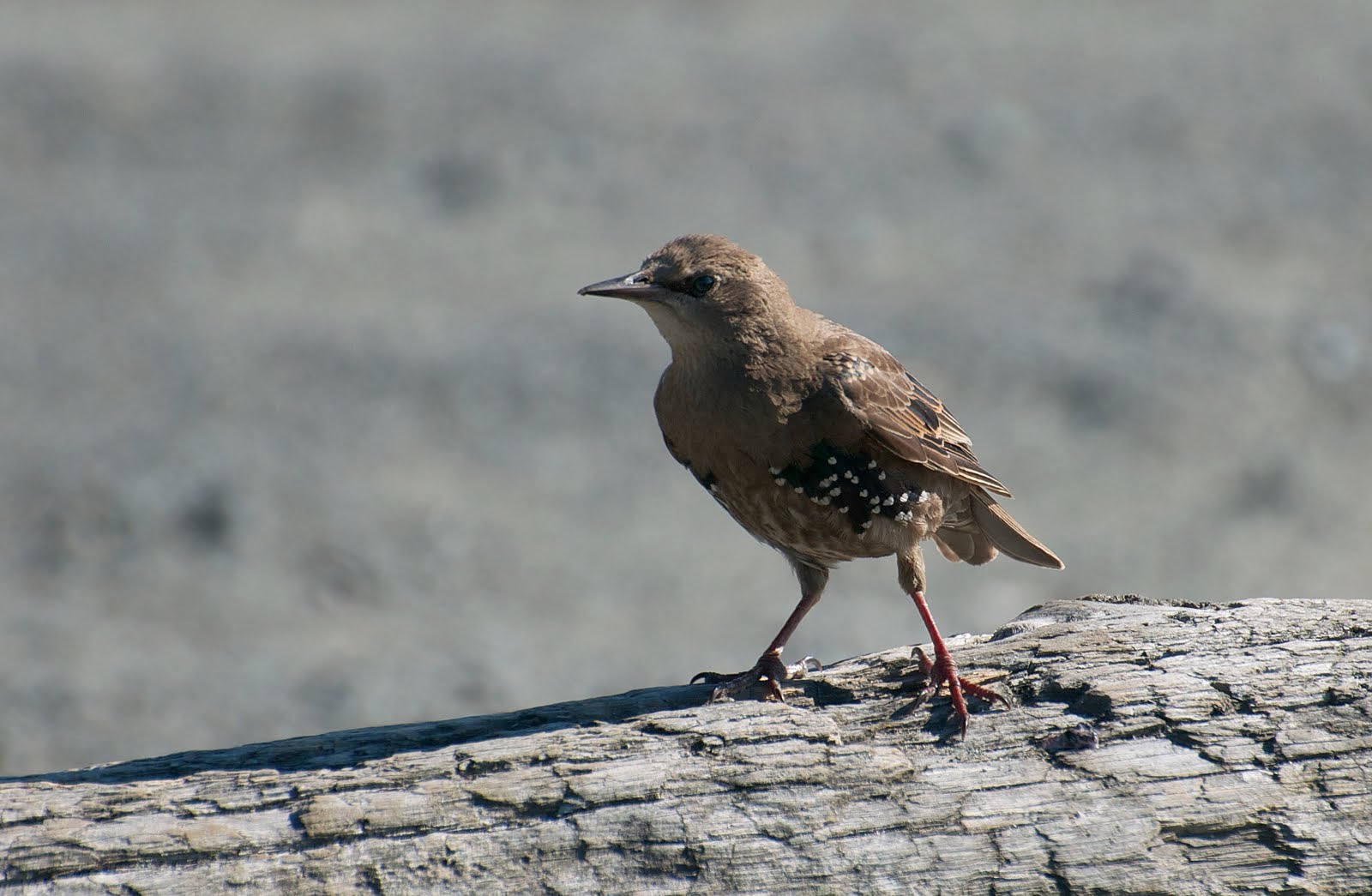
Such is the case with tonight's post. I only got a couple pictures of this juvenile European Starling, so it doesn't take long to decide which to post, work it up and upload. It's an interesting picture as the juvenile is beginning to molt into adult basic plumage, evidenced by the mostly brown coloring with the start of black, spotted, adult feathers emerging on its belly. But I have some great pictures of Semipalmated Plovers, Western Sandpipers, Sanderlings and Heermann's Gulls from a couple of weeks ago and some nice pictures of what I think are Semipalmated Sandpipers from this past week that I have been pondering. Sometimes quantity can be overwhelming. :-)
I'm getting a bit behind on posting. I've still got some images from weeks ago that I want to post. Reviewing all the pictures and post processing can take a lot of time, so sometimes I put up the "easier", "quicker" image to get a post up leaving some of the tougher (sometimes better images) images behind.
Such is the case with tonight's post. I only got a couple pictures of this juvenile European Starling, so it doesn't take long to decide which to post, work it up and upload. It's an interesting picture as the juvenile is beginning to molt into adult basic plumage, evidenced by the mostly brown coloring with the start of black, spotted, adult feathers emerging on its belly. But I have some great pictures of Semipalmated Plovers, Western Sandpipers, Sanderlings and Heermann's Gulls from a couple of weeks ago and some nice pictures of what I think are Semipalmated Sandpipers from this past week that I have been pondering. Sometimes quantity can be overwhelming. :-)
 These two wet European Starlings greeted me as I pulled into the parking lot at Le parc national des Îles-de-Boucherville on Saturday.I have now seen European Starlings on 2 different continents, 3 countries and 6 states. I'm not sure that is a good thing. :-)

 Along with the hybrid Mallards, there are usually Brewer's Blackbirds and European Starlings in the parking lot at Fernhill Wetlands. Most of the time they congregate down near the water and I typically take some pictures of them on my way back to my car as I approach the parking lot from the west side of Fernhill Lake.European Starlings take a bad wrap as undesirable and they are intrusive birds that can make a mess and scare off other birds. But I find that they can have some very interesting and beautiful foliage. While they are more black with iridescent purples and greens during breeding season, they are especially interesting, in my opinion, during the non-breeding season as they are covered with creamy speckles and brown highlights such as the birds in the images above.

 This European Starling was sitting in a tree along the service road on the northern boundary of Kingfisher Marsh at Jackson Bottom Wetlands Preserve. This is the first time I have been at Jackson Bottom and not had to walk through some mud along this road.
 This European Starling was one of the first birds I photographed from the bird blind at TRNWR.
 I'm getting a bit behind on posting. I've still got some images from weeks ago that I want to post. Reviewing all the pictures and post processing can take a lot of time, so sometimes I put up the "easier", "quicker" image to get a post up leaving some of the tougher (sometimes better images) images behind.


